About GPAK Girls
Girl Pride Africa Kenya is a community-rooted organization working in Homa Bay, Siaya, Kisumu, and Migori counties in western Kenya. We walk alongside adolescent mothers and pregnant girls aged 13–23 as they rebuild stability for themselves and their children.
Why We Work Here
In the communities around Lake Victoria, two crises overlap. The former Nyanza region has carried some of the highest HIV prevalence in Kenya for decades, and teenage pregnancy here is closely linked to HIV risk. Many girls who become pregnant young are in unequal or transactional relationships, with little access to youth-friendly health services or economic options.
Many of the girls we support are living with HIV themselves, or are raising children at high risk of exposure. When a girl becomes a mother at fourteen or sixteen here, she usually loses school, family support, and safety at the same time, so responding to teenage motherhood in this region means responding to HIV prevention, care, and stigma at the same time.
That is why our model is integrated rather than single-issue: psychosocial care, health referrals, education, livelihoods, and family strengthening, delivered through the community structures girls already trust.
Our Mission
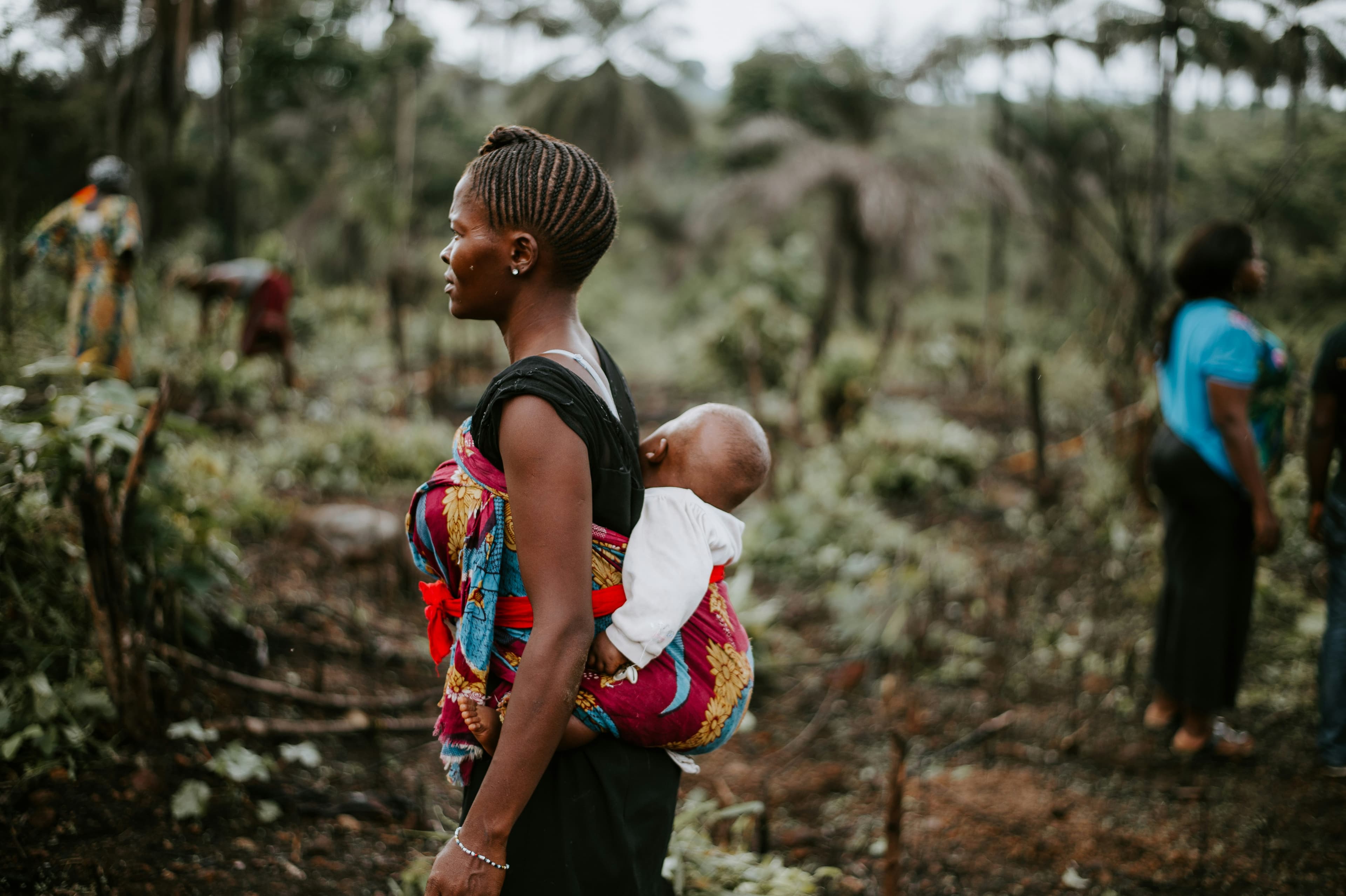
To support adolescent mothers and pregnant girls in western Kenya to heal, return to learning, earn a dignified living, and raise healthy children, through psychosocial care, health referrals, education, livelihoods, and family strengthening.
Our Vision
Communities around Lake Victoria where no girl’s future ends with an early pregnancy, where every young mother and her child can be healthy, educated, economically secure, and free from stigma.
How Change Happens
Our theory of change is simple: when a young mother is emotionally supported, connected to health care, back in education or earning, and backed by her family, she and her child thrive, and the cycle of early pregnancy and HIV vulnerability weakens with her.
Reach girls where they are
Trusted community members help us identify pregnant girls and adolescent mothers aged 13–23 who have dropped out of school, been rejected by family, or lost access to services.
Stabilize and support
Psychosocial counselling, peer groups, and case management address trauma and stigma first, while referrals connect each girl to HIV testing and care, antenatal and postnatal services, and child health support.
Build a future
School re-entry, literacy and life-skills classes, vocational training, and agriculture-based livelihoods give each mother a realistic path to income and independence.
Strengthen the family around her
Parenting and caregiver support informed by evidence-based approaches such as the Sinovuyo programme rebuilds the home environment, so gains last beyond our direct involvement.
Where We Work
Four counties in western Kenya, near the shores of Lake Victoria.
Homa Bay
Our home base and largest area of operation, on the shores of Lake Victoria.
Siaya
Community outreach and school re-entry support.
Kisumu
Health system linkages and partner coordination.
Migori
Outreach to underserved lakeside and border communities.
Our Story
GPAK Girls began in 2018, in the villages around Homa Bay and Siaya, while our founder was serving there as a volunteer local missionary with CGEC. What he found was the distance between policy and daily life: Kenya had school re-entry guidelines and campaigns against stigma, and yet the girls in front of him had been sent away from home, pushed out of school, and left to raise children with no income and no one to talk to. There was no dedicated support for teenage mothers anywhere near them.
So we started small: weekly life-skills circles in Homa Bay and Siaya where a handful of teenage mothers learned budgeting, nutrition, and job skills, and found something rarer, a place where they were welcomed instead of judged. Our team visited girls where they lived, bringing food and baby items, negotiating with parents and schools, one household at a time, and by 2019 the work was being featured on Radio Maisha and Siaya’s Radio Mikayi.
Between 2018 and 2020 most of what we spent came from our own pockets, while we built the structure we needed to operate legally. Well-wishers joined the initiative, LARCOD came alongside us as our first partner organization and gave the work a great deal of support, and in April 2020 Girl Pride Africa Kenya was registered with the NGOs Co-ordination Board of Kenya. As trust grew, so did we. Today those circles have grown into integrated programmes that connect psychosocial support, health referrals, school re-entry, vocational training, and family strengthening, and we have supported hundreds of adolescent mothers and pregnant girls across four counties.
We remain deliberately community-rooted. Our staff and volunteers come from the communities we serve, we work in partnership with local health facilities, schools, and county services, and the girls themselves shape how our programmes evolve.
Our Values
Dignity First
Every girl is met with empathy and respect, never judgment. Her story belongs to her, and her consent guides how we work and what we share.
Community-Rooted
We work through the families, schools, health facilities, and local leaders that girls already know and trust.
Accountable
We are transparent about what we do, what it costs, what works, and what we are still learning.
Whole-Person Support
Teenage motherhood, HIV risk, poverty, and exclusion are connected, so our response connects health, education, livelihoods, and family.
Meet Our Team
GPAK Girls is run by a multidisciplinary team with experience in programme leadership, public health and epidemiology, psychosocial counselling, finance, and community engagement, supported part time by our founder on strategy, data, and monitoring and evaluation.
Our TeamGovernance & Registration
Girl Pride Africa Kenya is registered with the NGOs Co-ordination Board of Kenya under Section 10 of the NGO Co-ordination Act (Reg. No. OP.218/051/19-189/11666, registered 30 April 2020; community work since 2018). An advisory committee provides oversight of strategy, finances, and safeguarding, and our finance function is led by a Certified Public Accountant.
Registration documents, governance records, policies, and financial information are available to partners and donors as part of due diligence.
Read about our accountability